
Moving in winter in Kansas City: what to know before you book.
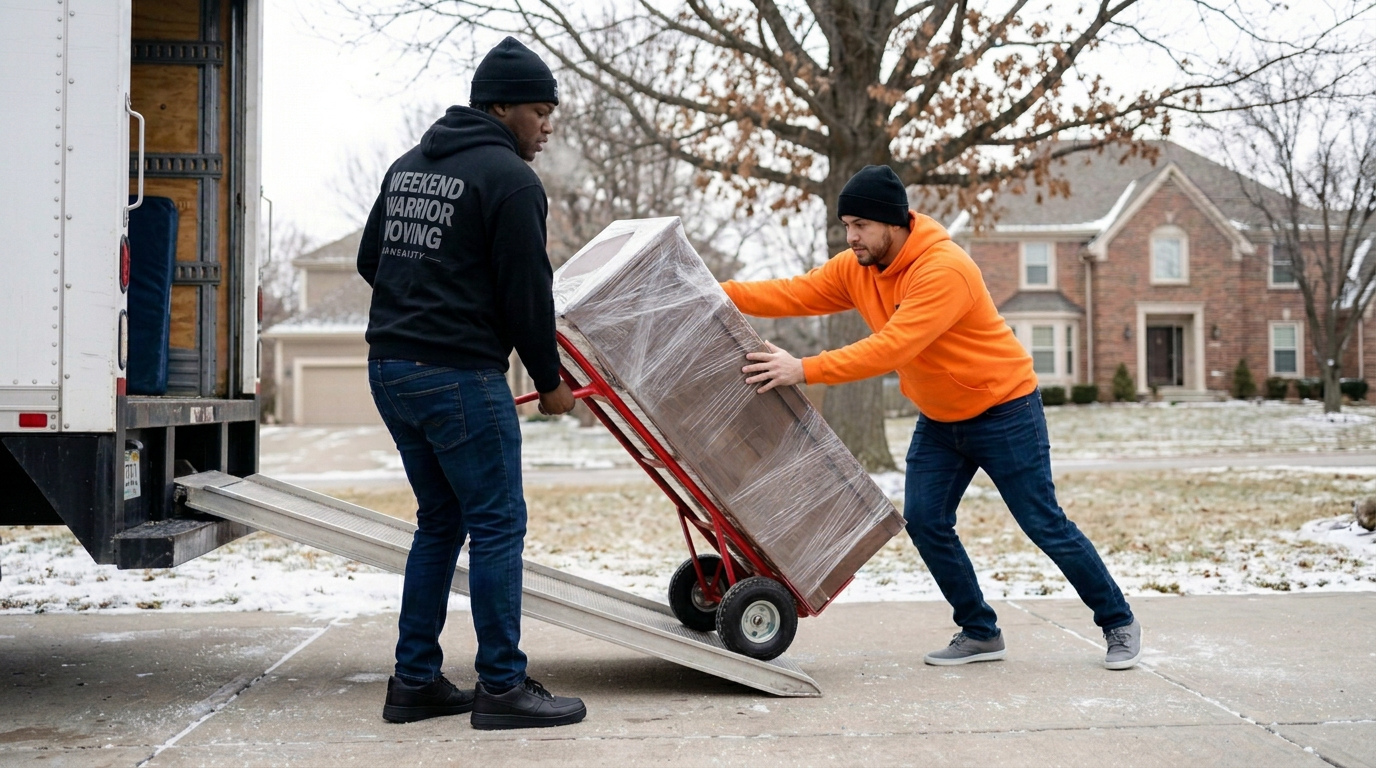
In Kansas City, the difference between a June move and a January move is more than a coat. It's a different job. But it's also cheaper, faster to book, and — for the right household — genuinely the smart season to move. Here's what a winter move actually looks like from the truck side.
The moving industry has a running joke: nobody in Kansas City wants to move in January, and everybody in Kansas City should move in January. Winter is the cheapest, most flexible, and least stressful season to change addresses in this metro — as long as you know what you're getting into and what actually changes.
Winter moves in KC are 10–20% faster to book, roughly the same crew rate, and require about 60–90 extra minutes for salt, floor protection, and slower loading. Move on a dry cold day and it's the best deal in the calendar. Move during an ice storm and reschedule — nobody wins.
The pros: why we quietly recommend winter moves
- Availability. Peak season (May–August) books 3–5 weeks out on weekends. January books next week, sometimes tomorrow.
- Price stability. National van lines drop rates 10–20% in the off-season. Local outfits like us stay flat all year, but you'll get the best crew, not the last one available.
- Cooler weather is easier on us. A KC July move at 96°F and 80% humidity is genuinely brutal. A 35°F January morning? We move faster.
- Landlords are motivated. Rental turnover slows in winter, which means better negotiating leverage on the new place.
- Truck rentals are plentiful. Try booking a 26-foot U-Haul for the last Saturday of July. Then try January 14th. It's a different world.
The cons: what actually goes sideways
- Slush and salt on floors. The single biggest complaint on winter moves. Solvable with runners, but somebody has to bring them.
- Frozen liquids. Anything liquid in the back of a truck for 8 hours in 20°F weather is at risk. Candles, wine, cleaning products, houseplants.
- Shorter daylight. Sunset in Kansas City in January is 5:15 p.m. Book the morning slot.
- The ice storm variable. Two or three days a year, KC gets a genuine ice event. On those days, we reschedule. Free of charge. Nobody moves in an ice storm.
- Utilities and Wi-Fi lag. Provider techs are slower to install in winter. Schedule cable and internet the day before the move, not the day of.
How a KC crew actually preps for a winter move
What we bring on a January move that we don't bring in July, in order of importance:
- A bag of ice-melt. First act at arrival is salting the walk and the porch steps. Non-negotiable.
- Non-slip floor runners. Rolled out from the front door to whatever room we're working in. Your hardwoods stay dry.
- Extra moving blankets. Anything that has to sit on the truck ramp gets wrapped. Cold air is fine; blowing snow is not.
- Windshield scrapers and a snow brush. On the truck, in every crew vehicle.
- Hand warmers. For us. This one's not for the customer.
Your winter-move prep checklist
Do these two days before the crew arrives:
- Shovel and salt the walk yourself, or arrange for it. A cleared walkway saves 20 minutes on arrival.
- Reserve a hard parking spot at both ends. Cones or trash cans. A crew truck stuck in an unshoveled street is a bad day.
- Pack liquids separately in a warm car. Wine, oils, cleaning products, houseplants, candles. They ride with you, not the truck.
- Confirm heat at the new place. If the furnace is off, turn it on 24 hours ahead. An unheated house tanks unloading time (and mood).
- Have hot coffee ready. This one is 100% optional. It is also 100% appreciated.
When to reschedule (and how we handle it)
There are two conditions where we call the customer the night before and reschedule:
- Active ice storm. Freezing rain in progress or forecast. Walkways become skating rinks; loading anything larger than a lamp is genuinely dangerous.
- Unplowed heavy snow (6"+). If the streets aren't plowed to the curb, our 26-foot truck isn't reaching your driveway.
Anything else — cold, light snow, wind chill — is a normal working day. If the forecast looks borderline, call us. We'd rather have the conversation Thursday night than have your stuff in the truck on Friday morning wondering what to do.
The winter-move sweet spot in Kansas City
If you're flexible: target the second or third week of January or February, midweek, morning slot. You'll get the crew's A-team, an easy-to-book truck, and rates that don't spike for the season. The holidays are done, the tax refund hasn't hit, and moving is the last thing on anyone's mind — which is exactly why it works.
Get a firm winter-move quote at 816-988-1306, or start with the moving calculator and we'll dial in the exact crew size and hours for your home.
Estimate boxes, truck size, and crew hours for your home in about 60 seconds.
Open calculator816-988-1306 — most callers get a firm number in under five minutes.
Call nowQuick answers
Do movers work in the winter in Kansas City?
Yes, all winter. Weekend Warrior Moving books seven days a week from December through February. We only reschedule for the specific conditions that make loading dangerous — an active ice storm or unplowed streets after a heavy snow. Cold alone is not a reason to reschedule.
Is it cheaper to move in the winter?
Yes, usually. December through February is off-peak in KC. You'll get better crew availability, next-week booking instead of month-out, and often a lower price at national van lines. Weekend Warrior Moving charges the same $140/hr year-round, but weekend and weekday slots are wide open.
How do movers handle snow and ice on moving day?
We salt the walkway and stairs on arrival, we lay down non-slip runners on hardwood floors so we don't track slush, and we use moving blankets to protect anything that has to sit outside for more than a minute. Snow doesn't stop the job; it just slows it down about 15%.
What items are dangerous to move in freezing weather?
Liquids will freeze and expand in the truck: candles, cleaning products, liquid soaps, houseplants, aerosols, and any bottles of wine or oil. Pack those separately in a warm vehicle. Electronics can handle the cold ride but need to acclimate for 24 hours before you plug them in.